


 Fleet Management
 Route optimization
 Shuttle Transportation
 Delivery Management
 School Bus Transportation
 Ride Sharing Management
 Airport Transfer Booking
  Vehicle inspection
 Car Rental Management
 Trucking & Logistics
 Food & Beverage
 E-Commerce
 Passenger Transit
 Delivery
 School & Corporate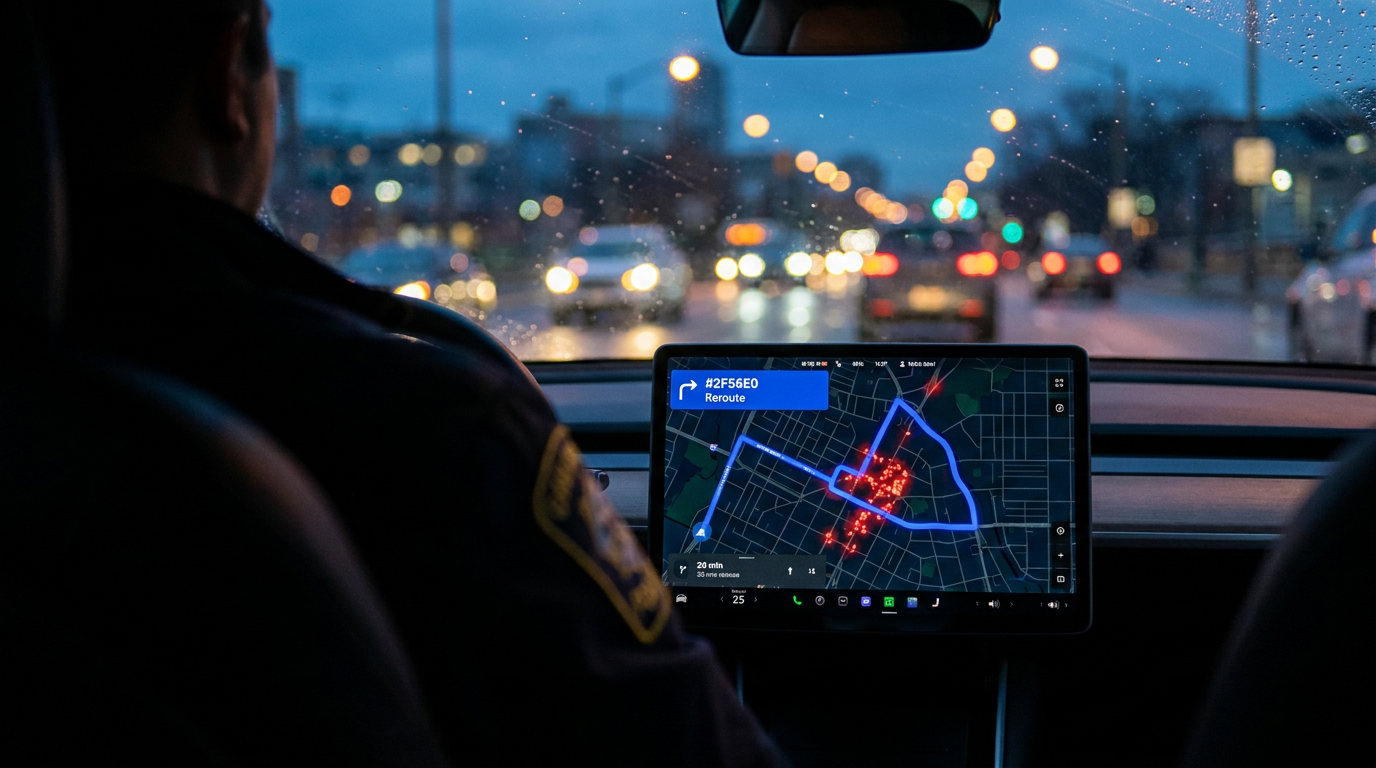
Why Real-Time Fleet Tracking Software Is Essential for Modern Taxi Dispatch
Real-time fleet tracking software is a GPS-powered system that displays the live location, speed, and status of every vehicle in a fleet on a single dashboard — so operators always know where each cab is, what it’s doing, and when it will arrive. For a taxi business, that live picture isn’t a nice-to-have. It’s the foundation the entire dispatch operation runs on.
Why is real-time fleet tracking essential for taxi dispatch? Because dispatch is fundamentally a matching problem — the right vehicle to the right passenger, on the fastest route, at the right time — and you cannot solve that problem well without knowing, second by second, where every vehicle actually is. Without live tracking, dispatch runs on guesswork. With it, dispatch runs on data.
Quick answer: Real-time fleet tracking software gives taxi dispatchers live GPS visibility of every vehicle. That visibility powers faster, proximity-based assignments, accurate passenger ETAs, dynamic real-time routing around traffic, and the operational insight to cut idle time, fuel, and disputes.
Below, we cover what real-time fleet tracking software actually does, why modern taxi dispatch can’t function without it, and how AllRide delivers this visibility for cab operators.
What Is Real-Time Fleet Tracking Software?
Real-time fleet tracking software — also called real-time vehicle tracking software — uses GPS, and increasingly IoT sensors and telematics, to continuously report each vehicle’s location and status back to a central platform. Instead of calling a driver to ask “where are you?”, a dispatcher sees the answer on a live map.
Modern GPS fleet tracking goes well beyond a dot on a screen. A capable platform captures location, speed, heading, route adherence, engine status, and mileage in real time, then layers that data onto fleet tracking and mapping software so the whole operation is visible at a glance. That combination of live positioning plus mapping is what turns raw GPS signals into decisions a dispatcher can act on immediately.
In a taxi context, this data feeds three things at once: the dispatch engine that assigns trips, the passenger app that shows an incoming cab, and the analytics layer that helps managers run a tighter operation over time.
Why Modern Taxi Dispatch Can’t Run Without Real-Time Visibility
Dispatch used to mean a controller with a radio, a mental map of the city, and a lot of guesswork. That model breaks down the moment a fleet grows past a handful of vehicles. Here’s why live visibility is now non-negotiable.
You can’t dispatch what you can’t see
The core job of dispatch is assigning the nearest suitable vehicle to each request. Without real-time GPS positions, a dispatcher is guessing which cab is actually closest — and guesses are frequently wrong. A vehicle that looks free might be mid-drop-off; one that seems far might be a block away. Live tracking removes the guesswork, so every assignment starts from the true state of the fleet.
Passengers expect to watch their ride arrive
App-based ride-hailing has permanently reset customer expectations. Passengers now assume they can see their cab approaching on a map with a live ETA. A taxi operation without real-time vehicle tracking software simply can’t offer that experience — and in a competitive market, that gap costs bookings.
Blind spots quietly drain margin
Every minute a dispatcher spends confirming positions, every empty mile driven because a farther car was assigned, every “where’s my taxi?” call handled manually — these are costs created by a lack of visibility. Real-time tracking closes those blind spots, and the savings compound across thousands of trips.
How Real-Time Fleet Tracking Software Transforms Dispatch
Once live location data flows into the dispatch engine, four capabilities become possible that manual operations simply can’t match.
Smarter, proximity-based assignment
With live positions for every vehicle, the system can automatically assign each trip to the nearest available, best-suited driver. Assignments happen in seconds instead of minutes, wait times drop, and dispatchers stop micromanaging matches they can trust the software to make.
Real-time routing and dynamic rerouting
Static routes fall apart the moment there’s an accident, roadwork, or rush-hour congestion. Real-time routing continuously factors current traffic conditions to guide drivers along the fastest available path — and reroutes on the fly when conditions change. The result is shorter trips, lower fuel burn, and more predictable arrival times for passengers.
Accurate ETAs and live passenger tracking
Because the platform knows exactly where the assigned cab is and how traffic is moving, it can give passengers a reliable ETA and a live map of their approaching ride. That transparency reduces cancellations, cuts inbound “where’s my cab?” calls, and builds the trust that drives repeat bookings.
A single operational picture
Good fleet tracking and mapping software puts the entire fleet on one live view — who’s on a trip, who’s free, who’s idle, and where demand is clustering. Dispatchers manage by exception instead of chasing every vehicle, and supervisors can spot and fix bottlenecks as they happen rather than after the shift.
Beyond Location: What Modern Fleet Tracking Software Adds
The best fleet management GPS tracking software does more than show where vehicles are. It turns the continuous stream of vehicle data into safety, uptime, and efficiency gains.
Driver behavior and safety
Telematics data surfaces harsh braking, speeding, and excessive idling — so operators can coach drivers, reduce accident risk, and lower the insurance and wear costs that unsafe driving creates.
Geofencing and route adherence
Geofencing lets operators define zones and get alerted when vehicles enter, leave, or deviate from expected areas. For taxis, that means catching off-route trips, monitoring airport or zone coverage, and enforcing service boundaries automatically.
Predictive maintenance and uptime
By collecting engine and usage data, fleet gps tracking software can flag maintenance needs before they become breakdowns. Scheduling service proactively keeps more cars earning revenue and avoids the steep cost of roadside failures and emergency repairs.
Analytics that drive utilization
The same data that powers live dispatch also builds the reporting layer: vehicle utilization, peak-demand windows, revenue per vehicle, and fuel efficiency. Managers use those insights to right-size the fleet, staff to real demand, and cut the idle capacity that erodes margin.
The Business Case: What Real-Time Tracking Actually Saves
Real-time fleet tracking software pays for itself through several mechanisms at once. It reduces empty miles by ensuring the genuinely closest vehicle takes each trip. It cuts fuel and travel time through traffic-aware routing. It lifts fleet utilization by making idle vehicles and demand patterns visible. It shrinks administrative overhead by automating the position-checking and status updates dispatchers once did by hand. And it reduces disputes and cancellations by giving passengers accurate, transparent ETAs.
None of these savings require a leap of faith — they’re the direct, mechanical result of replacing guesswork with live data. The larger and busier the fleet, the larger the absolute return.
How AllRide Delivers Real-Time Fleet Tracking Software for Taxi Operators
AllRide Cab is built around real-time visibility, giving taxi operators the live tracking and intelligence modern dispatch depends on. Here’s where that shows up in practice.
AI-based real-time GPS tracking. AllRide provides accurate, live location tracking of every vehicle with integrated navigation, so dispatchers always work from the true state of the fleet and passengers can watch their cab approach.
Traffic-aware route optimization and real-time routing. AllRide’s AI-driven routing is designed to find the shortest, fastest paths and account for real-time conditions — minimizing fuel costs and travel time on every trip.
Automated, proximity-based dispatch. Live positions feed automated driver assignment based on proximity and availability, cutting wait times and the manual overhead of matching trips by hand.
Beyond location. AllRide’s platform extends to geofencing, driver-behavior monitoring, and predictive maintenance, plus a centralized dispatch panel and analytics dashboard that turn fleet data into utilization, revenue, and performance insights.
One connected system. With 100+ API integrations and support for telematics and IoT data sources, operators can run tracking, dispatch, payments, and reporting through a single platform rather than stitching together separate tools.
A model and timeline that fit. AllRide is offered as both a subscription-based (SaaS) solution and a license-based, customizable enterprise/white-label build, with ready-made solutions that can go live in roughly five days. Pricing details are available on the AllRide Cab pricing page.
These are the capabilities behind AllRide’s 1,000+ transport and delivery businesses worldwide — including operators like Angola-based Tundavala Taxi and corporate transport provider Viapool — who rely on real-time visibility to run leaner, more responsive fleets.
Frequently Asked Questions
What is fleet tracking software?
Fleet tracking software is a GPS-based platform that shows the real-time location, speed, and status of every vehicle in a fleet on a central dashboard. For taxi operators, it’s the visibility layer that powers dispatch, passenger ETAs, and fleet analytics.
How does GPS fleet tracking help taxi dispatch?
GPS fleet tracking gives dispatchers live vehicle positions, so trips can be assigned to the genuinely nearest available driver. That means faster assignments, shorter wait times, accurate ETAs, and less empty mileage.
What’s the difference between real-time routing and route optimization?
Route optimization plans the most efficient route for a trip; real-time routing continuously adjusts that route based on live traffic and conditions, rerouting drivers when something changes. The best platforms do both.
Does real-time vehicle tracking software reduce costs?
Yes — primarily by reducing empty miles, cutting fuel and travel time through traffic-aware routing, raising fleet utilization, lowering admin overhead, and reducing cancellations. The savings scale with fleet size and trip volume.
Is fleet tracking software worth it for small taxi fleets?
Yes. Even small fleets benefit from automated proximity dispatch, accurate ETAs, and utilization insight — and scalable platforms let small operators start with core tracking and add capabilities as they grow.
The Bottom Line
Modern taxi dispatch is only as good as the visibility behind it. Real-time fleet tracking software replaces guesswork with live GPS data — sharpening every assignment, enabling real-time routing around traffic, delivering the accurate ETAs passengers now expect, and surfacing the analytics that keep a fleet efficient. It’s not an add-on to dispatch; it’s what makes competitive dispatch possible.
For any operator serious about running a responsive, cost-efficient taxi business, real-time tracking has moved from advantage to necessity.
See how real-time GPS tracking and AI routing could sharpen your dispatch. Book a Demo with AllRide today.